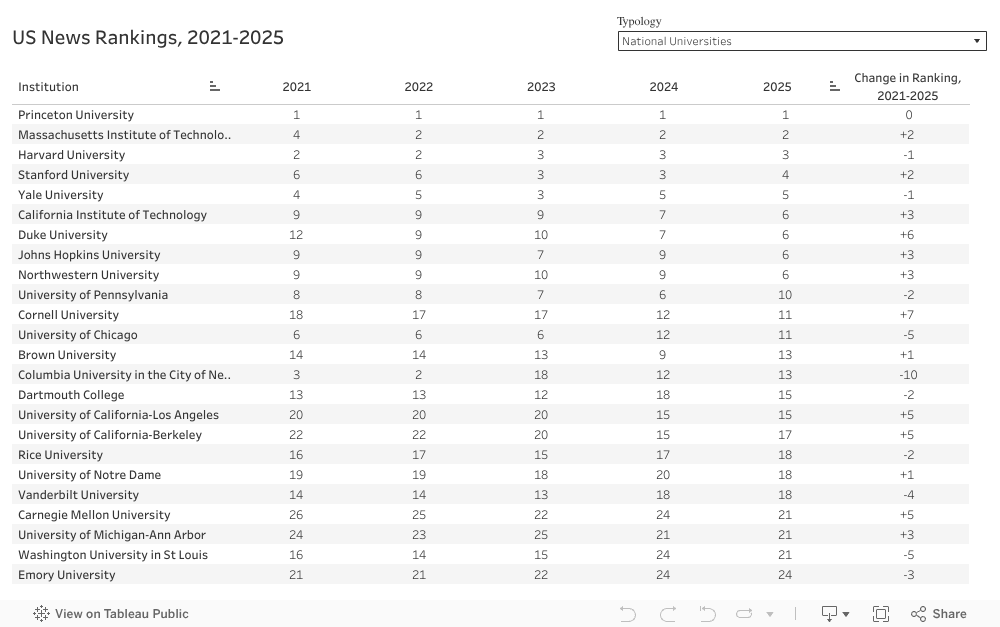
College rankings have long been a source of both pride and controversy in higher education. The US News & World Report rankings, in particular, hold significant sway over public perception and institutional priorities. A look at how these rankings have shifted from 2021 to 2025 reveals some intriguing trends and raises important questions about what truly defines educational excellence.
Major Movers Among National Universities
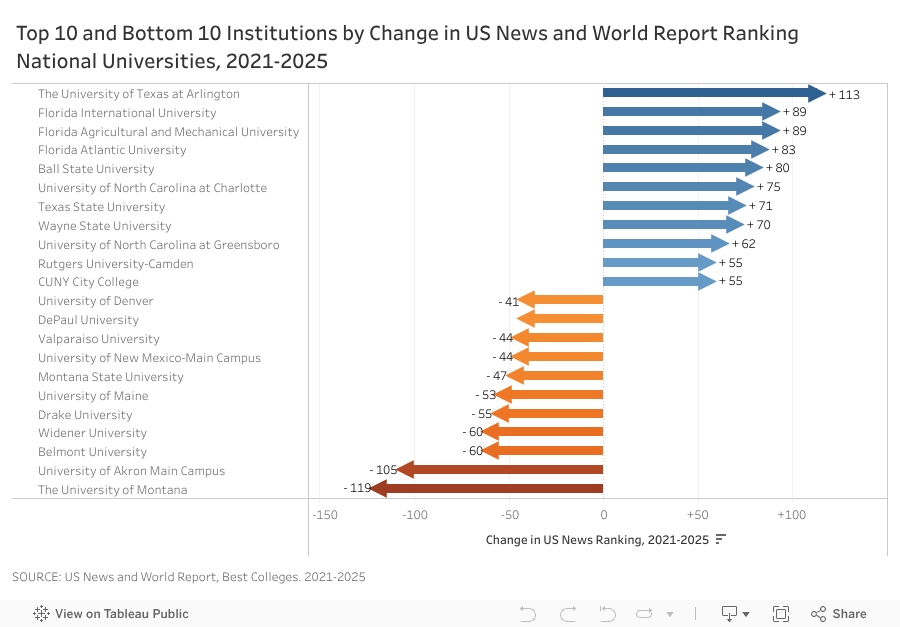
One of the most striking changes is the significant upward mobility of several public universities. The University of Texas at Arlington made the largest leap, improving its ranking by an impressive 113 spots. Florida International University and Florida Agricultural and Mechanical University both climbed 89 places. These dramatic improvements suggest these institutions have likely made concerted efforts to boost the metrics US News considers in its methodology.
At the other end of the spectrum, The University of Montana saw the steepest decline, dropping 119 places. Other notable declines include the University of Akron (-105 spots) and Belmont University (-60 spots). Such precipitous drops may reflect challenges in maintaining competitive standing amidst changing evaluation criteria or resource constraints.
Elite Universities: Small Shifts with Big Implications
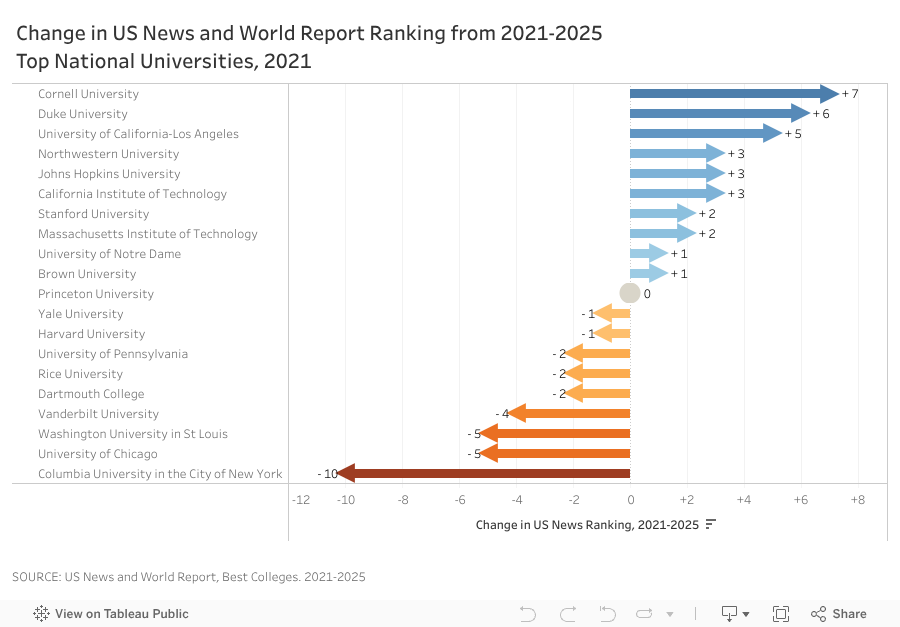
Among top-tier national universities, Cornell University showed the most improvement, rising 7 spots from 2021 to 2025. Duke, UCLA, Northwestern, and Johns Hopkins all gained ground as well. Interestingly, some perennial top-ranked institutions like Harvard, Yale, and UPenn saw slight declines. Columbia University experienced the most significant drop among elite schools, falling 10 places. This serves as a reminder that even the most prestigious universities cannot rest on their laurels in this competitive landscape.
Liberal Arts Colleges: A Changing Landscape
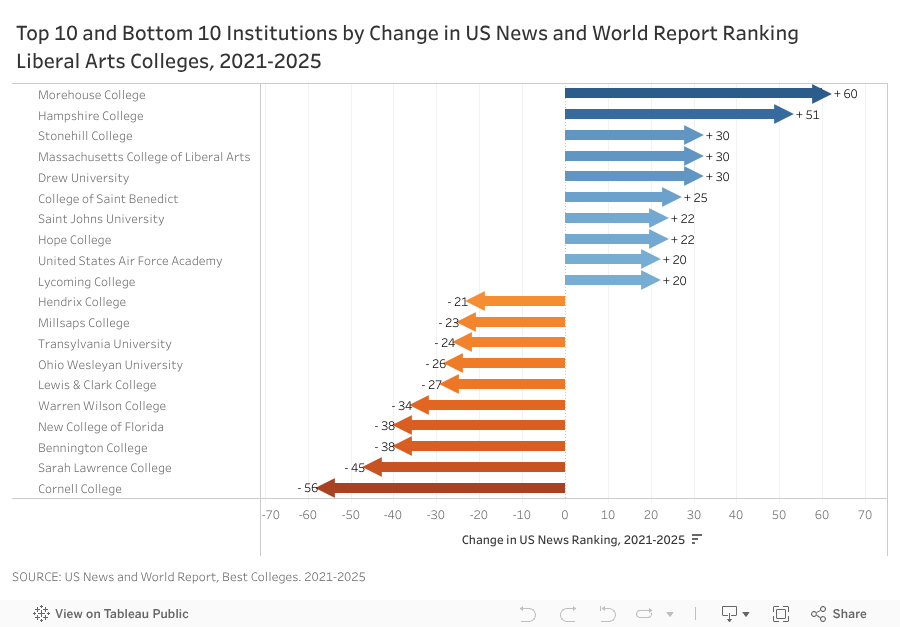
The liberal arts category saw its own share of dramatic shifts. Morehouse College has made a remarkable ascent, climbing 60 spots between 2021 and 2025. Hampshire College and Stonehill College also showed significant improvement. These gains potentially reflect increased recognition of the value of diverse, interdisciplinary education that liberal arts colleges often provide.
Conversely, some well-regarded liberal arts institutions faced challenges. Cornell College in Iowa dropped 56 places, while Sarah Lawrence College fell 45 spots. These changes highlight the dynamic nature of the liberal arts landscape and the ongoing debate about the role and value of this educational model in today鈥檚 society.
Shifts Among Elite Liberal Arts Colleges
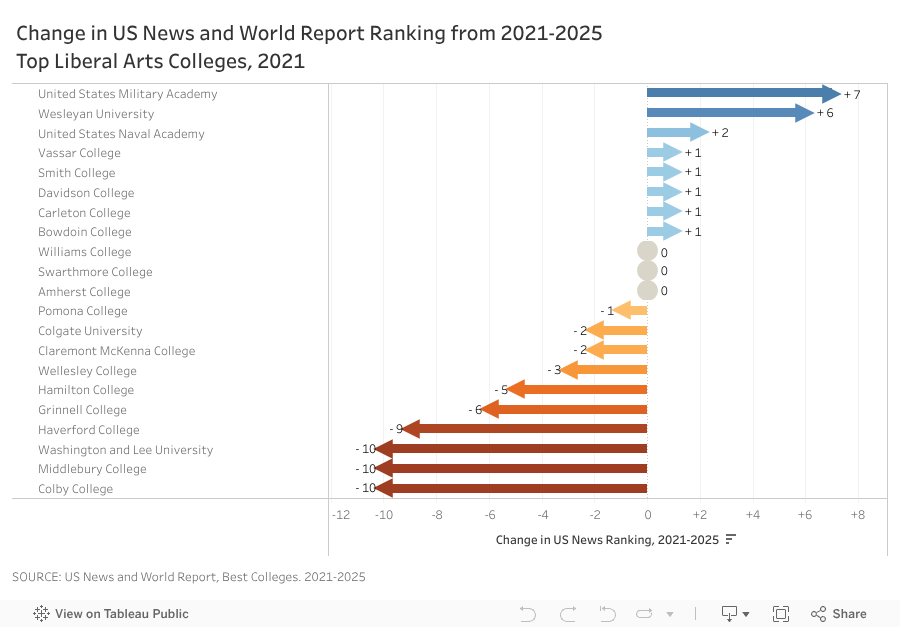
The upper echelons of liberal arts colleges saw subtle yet significant shifts from 2021 to 2025. While Williams College and Amherst College maintained their top positions, interesting movements occurred just below.
The United States Military Academy made the most notable gain, rising 7 places, potentially reflecting increased recognition of its unique blend of liberal arts and leadership training. Wesleyan University also showed improvement, climbing 6 spots.
Conversely, some prestigious liberal arts institutions faced challenges. Middlebury, Washington and Lee, and Colby each dropped 10 places, while Haverford College fell 9 spots. These declines, though not drastic in absolute terms, represent significant shifts within this competitive tier.
These varied trajectories highlight the competitive nature of top liberal arts colleges and the delicate balance between tradition and innovation. They also underscore the importance of looking beyond rankings to understand the unique strengths and offerings of each institution. As the higher education landscape evolves, even the most prestigious liberal arts colleges must continually adapt to meet changing student needs and societal demands.
Key Takeaways and Implications
Methodology Matters: The significant changes some schools experienced suggest that understanding the nuances of ranking methodologies is crucial for interpreting these results.
Holistic Evaluation: These rankings, while informative, are just one piece of the puzzle. Factors like specific programs, campus culture, and post-graduation outcomes remain crucial in assessing the right fit for individual students.
Adaptability is Key: The significant changes some schools experienced underscore the importance of institutions being able to adapt to changing educational landscapes and student needs.
Conclusion
As we interpret these shifts in ranking, it鈥檚 important to maintain perspective. A rise or fall in rankings does not necessarily correlate directly with changes in educational quality or student experience. However, these shifts do reflect real changes in how institutions are perceived and evaluated within the higher education ecosystem.
These trends may prompt reflection on institutional priorities and the metrics by which we measure educational success. As the landscape of higher education continues to evolve, so too must our approaches to evaluating and improving academic excellence.
For a more comprehensive view, we encourage you to examine the full list of rankings and their shifts provided below. This detailed information can offer valuable insights into how specific institutions have fared over the past few years and may help identify trends or patterns not immediately apparent in our analysis.
Ultimately, the most valuable metric of an institution鈥檚 success is its ability to provide transformative educational experiences and prepare students for future success. While rankings offer a useful snapshot, they are just one tool in the complex process of finding the right educational fit. As we navigate the ever-changing world of higher education, keeping this broader perspective in mind is essential for making informed decisions about the college journey.