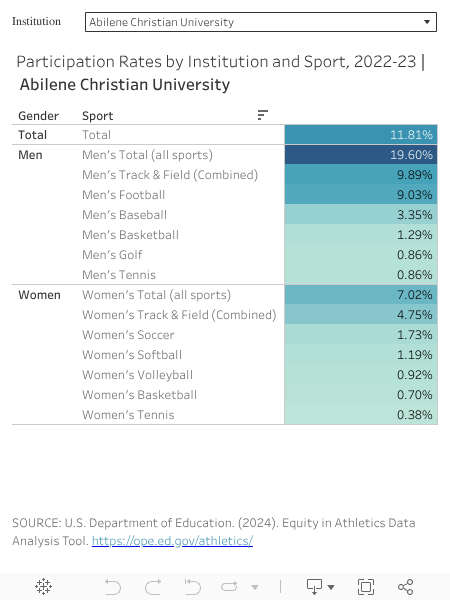
Collegiate athletics have long been an integral part of the higher education experience in the United States. From NCAA powerhouses to smaller NAIA institutions, athletic programs can shape campus life, attract prospective students, and serve as a point of pride for both alumni and local communities. In recent years, shifting demographics and evolving enrollment strategies have prompted many colleges to reassess their investment in athletics. By examining data from the Equity in Athletics Data Analysis Tool (U.S. Department of Education, 2024), we gain valuable insights into how participation rates have changed over time, how they differ by institutional type, and which colleges currently rank highest in terms of overall athletic participation.
Throughout this post, we will explore the key findings that emerge from these data, discuss implications for institutional policy and practice, and encourage readers to explore the interactive visualizations themselves. These resources allow stakeholders鈥攑articularly higher education experts鈥攖o identify patterns, investigate differences between institutions, and consider how athletics may fit within broader admissions and enrollment strategies.
The Rising Tide: How Athletics are Reshaping the College Experience
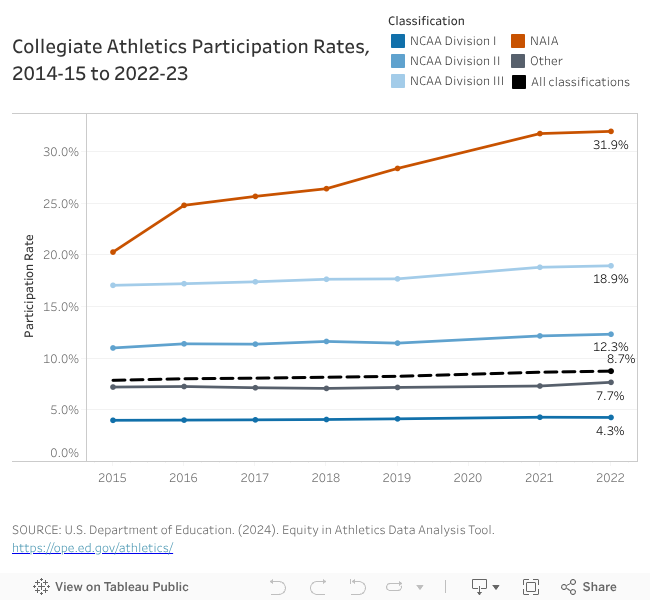
The first chart shows how participation rates have evolved since 2014鈥�15 across different athletic associations and divisions: NCAA Division I, Division II, Division III, NAIA, 鈥淥ther鈥� (e.g., junior colleges or specialized athletic associations), and an overall aggregate. These participation rates were derived by dividing the unduplicated student athlete headcount by the institution鈥檚 undergraduate enrollment.
NAIA Growth
Perhaps the most striking feature is the significant increase in NAIA participation rates over the last several years, rising from around 20% to just under 32%. This suggests that NAIA schools may be leveraging athletics more actively as a tool for student recruitment or have expanded their program offerings during this period.
NCAA Divisions鈥� Stable but Distinct Trajectories
NCAA Division III consistently posts a participation rate around 15鈥�19%, displaying a modest upward trend. Division II appears slightly lower in the 8鈥�13% range, while Division I hovers around 4鈥�5%. Division I鈥檚 lower percentage can be partially explained by larger undergraduate populations at many DI institutions鈥攖here are simply more students in the denominator, which tends to reduce the overall percentage of student-athletes.
Overall 鈥楢ll Classifications鈥� Increase
The dotted black line, representing the average across all classifications, shows a slow but noticeable climb, reaching nearly 9% by 2022鈥�23. While that average might look modest, keep in mind that it includes a vast array of institution types鈥攆rom the nation鈥檚 largest public universities to small liberal arts colleges. The upward trend in the overall line suggests a broad-based increase in athletic participation nationwide.
These patterns hint at how different institutional missions and student demographics could be driving athletic programs and the student experience. Higher education experts might note that smaller schools, particularly those in NAIA or NCAA Division III, often use athletics as part of their enrollment and retention strategies. Meanwhile, large NCAA Division I institutions have more total students, leading to smaller proportions of athletes even though they might have the most extensive athletic departments in absolute numbers.
Public vs. Private: Where Athletes Make Up the Most of Campus Life
Private vs. Public Divide
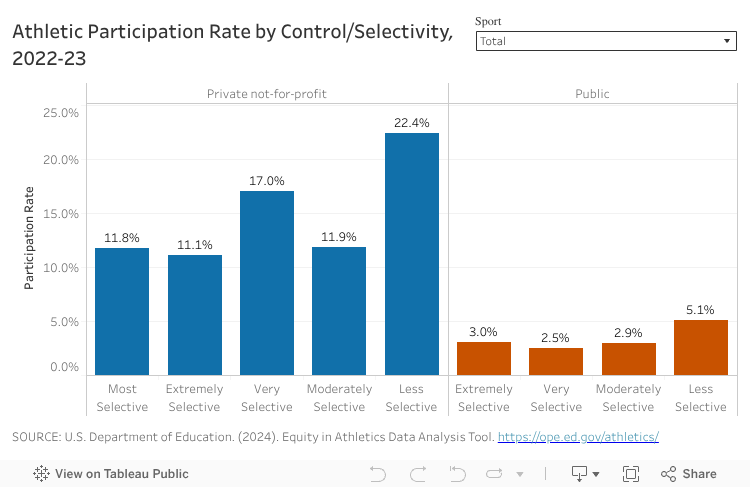
The chart shows that private, not-for-profit institutions generally report higher student-athlete participation rates. In particular, 鈥淟ess Selective鈥� private not-for-profits top the chart at over 22%, dwarfing their public counterparts鈥攚hich come in at around 5% for similarly less selective institutions.
Selectivity Gradient
Within private institutions, there is a notable difference between the most selective (hovering around 11鈥�12%) and the less selective (22.4%). This gradient indicates that less selective private colleges might more aggressively recruit student-athletes or offer more roster spots per capita to maintain enrollment. Similarly, among public institutions, athletic participation declines slightly as selectivity increases, but the absolute levels are lower across all categories compared to the private sector.
Enrollment Strategy and Student Experience
These observations align with a broader trend in higher education: institutions that face significant pressure to fill seats often highlight extracurricular opportunities鈥攅specially athletics鈥攖o attract prospective students. On the other hand, more selective institutions rely less on athletics for enrollment management, though they still offer high-quality athletic programs that compete at some of the highest levels nationally.
These data spotlight how organizational goals and market realities shape athletics. Stakeholders might consider whether these trends in athletic participation align with institutional priorities, such as improving student engagement, diversifying the student body, or enhancing the campus profile.
Playing to Win: The Schools Where Athletics Rule Campus
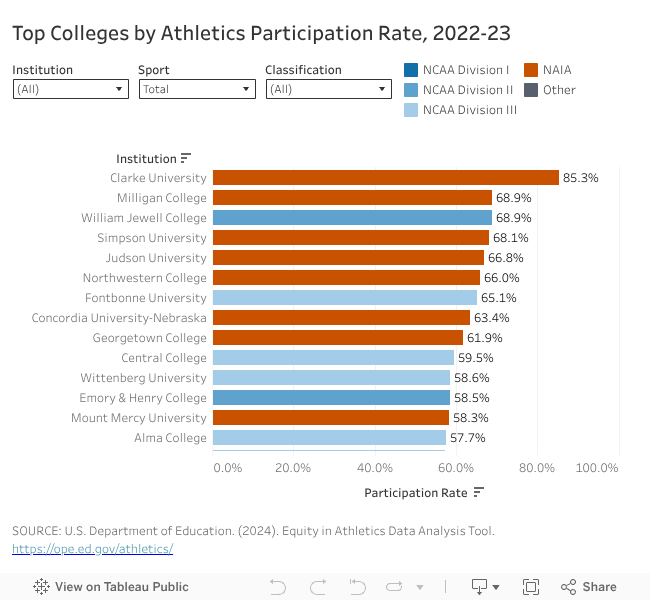
The third visualization ranks institutions by their overall athletics participation rate, with colors indicating NCAA division or NAIA affiliation. By default, the chart shows total participation rates, but it can be filtered by sport or classification.
Leading the Pack
Clarke University, an NAIA-affiliated institution, stands out with an 85.3% participation rate. Other institutions hover between the high 50s and the high 60s, including a mix of NAIA schools (like Milligan College and Judson University) and NCAA Division III colleges (such as William Jewell College and Wittenberg University). The consistent presence of smaller private institutions underscores the role athletics can play in schools with fewer undergraduate enrollees overall.
Institutional Profiles
Many top-ranked institutions by participation rate share characteristics: they are often smaller schools, sometimes religiously affiliated, and frequently located in regions where competition for undergraduates is high. Athletics in these contexts may serve as a primary component of institutional identity and a significant contributor to student engagement.
Game Plan: What This Means for Future Student-Athletes
For prospective students who are passionate about sports鈥攁nd for families seeking a supportive athletic environment鈥攖hese top institutions can provide a robust experience. Coaches and admissions staff at these colleges typically collaborate on recruiting strategies that benefit both the athletic department and the overall enrollment picture.
Conclusion
Our analysis of collegiate athletic participation rates reveals:
- Overall Increase in Athletic Participation: NAIA programs show especially strong growth, while NCAA Divisions vary due to differing institutional missions and sizes.
- Influence of Institutional Control and Selectivity: Less selective private institutions often see higher participation rates, reflecting a strategic use of athletics to bolster enrollment and campus life.
- High-Participation Institutions are Often Smaller, Private Colleges: Many top-ranking schools embrace athletics as a significant component of campus identity and student engagement.
- Sport-Level Insights: The ability to drill down into specific sports at individual institutions reveals which programs drive participation and how they align with broader institutional objectives.
The Bigger Picture: Athletics as a Strategic Asset
For many colleges, athletics can be a powerful tool not just for enrollment, but for retention, branding, and community building. However, institutions must weigh the costs of maintaining or expanding athletic programs with other strategic priorities鈥攁cademic resources, facilities, and financial aid. Meanwhile, prospective student-athletes and their families should consider not just a team鈥檚 competitiveness but also how athletics participation will fit with their academic and career goals.
Your Next Steps: Tools for Deeper Exploration
- Interactive Visualizations
We encourage exploring the interactive dashboards highlighted in this post. Filters can help you pinpoint your sport of interest, examine your home state鈥檚 colleges, or compare institutions side-by-side. - Equity in Athletics Data Analysis Tool
Visit U.S. Department of Education鈥檚 website for detailed data tables. These can provide a deeper dive into roster sizes, expenditures, and more. - Institutional Athletic Pages
Most colleges detail specific athletic offerings, scholarship policies, and recruitment forms on their official websites. Contacting coaches or current student-athletes can offer valuable firsthand insights.
By combining data-driven research with personalized campus exploration, families, students, and counselors can make well-informed decisions鈥攅nsuring that a student鈥檚 collegiate experience balances both athletic passion and academic success.
Institutional Explorer: Athletics Participation Rates